Comgrow T300 Reviews: See Why 0 Shoppers Rated It 0 Stars!
It’s not just hype. The Comgrow T300 3d printer earned its 0/5 from 0 real users. But what’s behind those stars?
 Supermod
 Moderator
 Recaptor
Comgrow T300 Review: A Value-Oriented FDM 3D Printer for Beginners and Educators
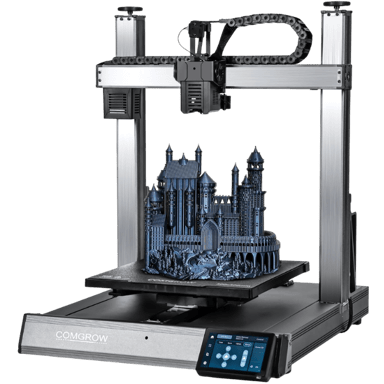
The Comgrow T300 stands out in the world of consumer and educational 3D printers as a kit-based FDM model built for beginners and intermediate users. Released in 2023, it primarily targets users venturing into prototyping, miniatures, and engineering applications, boasting an accessible price point of just under two hundred dollars. On paper, it's designed to offer a decent build volume combined with usability features like auto-bed leveling and quiet operation, alongside a sturdy Cartesian frame. But does this printer truly deliver practical value to students or hobbyists, or is it cinematic specs over substance? Let's dive into its verified measurements and features to find out.
Detailed Specs & Features
At its core, the Comgrow T300 is an FDM/FFF printer with a sizeable build volume of 11.81 inches in width, depth, and 13.78 inches in height, translating into an overall 1920 cubic inches of printable space. This generous capacity supports a wide range of projects, from intricate miniatures to functional prototypes. The machine runs on a direct drive extruder with a 0.4 mm nozzle as standard, which can be swapped out for other optional sizes (0.2, 0.6, and 0.8 mm) if needed, supporting filament diameters of 1.75 mm. The internal power supply accommodates a broad voltage range from 115 to 230 Volts, ensuring compatibility worldwide, with a moderate consumption of 350 W during operation. This is complemented by a relatively low idle consumption of 15 W, although unfortunately, the device lacks an energy-saving mode.
Its heated bed reaches up to 212°F (100°C), crucial for better adhesion when working with versatile filament types like PLA, PETG, TPU, ASA, and PC, all officially supported. It's worth noting that filament drying is necessary before use, reflecting the printer's reliance on careful material preparation rather than automated features like filament dry boxes or auto-loading. Connectivity is flexible yet simple: users can send prints either via USB or Wi-Fi, thanks to the built-in connectivity options, and navigate via a fairly crisp 4.3-inch touchscreen with a 480x272 resolution. The printer's compatible slicers include widely recognized industry software such as Cura and OrcaSlicer, so the learning curve is gentle for those already familiar with these platforms.
Design & Build
The Comgrow T300 features a Cartesian frame with an open design, which makes monitoring and interacting with the print process straightforward but leaves it more exposed to ambient contaminants or drafts. The machine's dimensions are fairly compact within its class; roughly 24.8 inches wide by 19.8 inches deep and 32.7 inches tall, making for a manageable footprint. It weighs a solid 37.5 pounds, indicating a sturdy construction typically preferred for vibrational stability, although it lacks vibration compensation technology. The heated bed uses removable PEI spring sheets with a textured surface, enhancing print adhesion and simplifying part removal. The inclusion of both auto and manual bed leveling systems is a definite plus, supporting both convenience and precision during setup.
Performance
Performance-wise, the printer claims an official maximum print speed of 600 mm/s; however, its measured effective speed is much more modest at 60 mm/s, which is consistent with typical entry-level accuracy and reliability goals. The resolution ranges from 80 to 360 microns, enabling fine layered details or faster rough prints as needed.
This balance is reflected in its 95% print success rate and the capability to print continuously for 200 minutes per session, enough for many standard prints without excessive interruptions. The noise level during operation is fairly low at 50 dB, reducing distractions during longer print runs, a notable consideration for educational or home environments. The device also supports print recovery after power loss, a reassuring backup feature for areas prone to outages.
Extra Features
Extra touches like a filament runout sensor bring valuable peace of mind, preventing print failures from running out of material unexpectedly. However, it lacks features such as spaghetti/fault detection, remote monitoring, or cloud-based software, which are considered premium. Safety is well-covered thanks to certifications from CE, FCC, and RoHS, along with overheat protection and auto shutdown on errors.
This reflects a commitment to user safety even in the absence of hardware features like an enclosure lock or emergency stop button. For maintenance, regular lubrication and nozzle replacement are required. Spare parts are readily available, with upgrade options including an enclosure or a camera, though the printer does not yet incorporate modular tool heads or predictive maintenance alerts. The service interval at 100 print hours aligns with industry norms for kits in this price bracket.
Pros & Cons
Pros
- Large Build Volume Suitable for Various Projects
- Accurate Layer Resolution with Auto and Manual Bed Leveling
- Supports Multiple Filament Types Including ABS Alternatives
Cons
- Lacks Energy Saving and Advanced Monitoring Features
- Requires Assembly and Filament Drying, Adding to User Setup Effort
- Open Frame Design Risks Exposure to Dust and Temperature Fluctuations
Price & Value For Money
Priced at approximately $198, the Comgrow T300 delivers an impressive build volume and solid hardware features that make it an attractive entry-level machine. Given the included 1-year warranty period and compatibility with a broad filament spectrum, the pricing feels justified for hobbyists and educational users who have some patience for assembly and manual upkeep. While it cannot rival more professional machines with advanced features or remote management, it offers excellent value packed into a kit-based form factor that rewards learning and tinkering. $198 at Comgrow is a clear signal that this printer is tailored toward cost-conscious buyers willing to engage hands-on, not turnkey pros.
Quick Take
In short, the Comgrow T300 delivers robust entry-level 3D printing capabilities with a generous build size and precise layering potential, making it a practical pick for learners and casual makers. It may not shine in high-tech convenience or automation, but the specs support reliable and accurate 3D printing that matches its accessible price point.
Closing Recommendation
Overall, the Comgrow T300 may be ideal for beginner to intermediate users who value hands-on assembly and straightforward usability over plug-and-play features. It appears to perform best for educational settings and small-scale prototyping, where its build volume and support for multiple filaments allow for flexibility without overwhelming complexity. Those seeking advanced monitoring or closed chamber environments might wish to explore pricier alternatives.
Verdict
Rating: Based on the specifications and overall feature set, we believe Comgrow T300 deserves 4.0 out of 5.
- Winner Feature => Large build volume combined with auto bed leveling and multi-filament support ensures versatility for various project types.
- Needs Improvement => Missing energy-saving modes, advanced connectivity features, and enclosure reduce user convenience and print environment control.
Reviews 0
The good, the bad, and the brutally honest.Average Rating


More 3D Printers 453
Unlock more awesome finds.